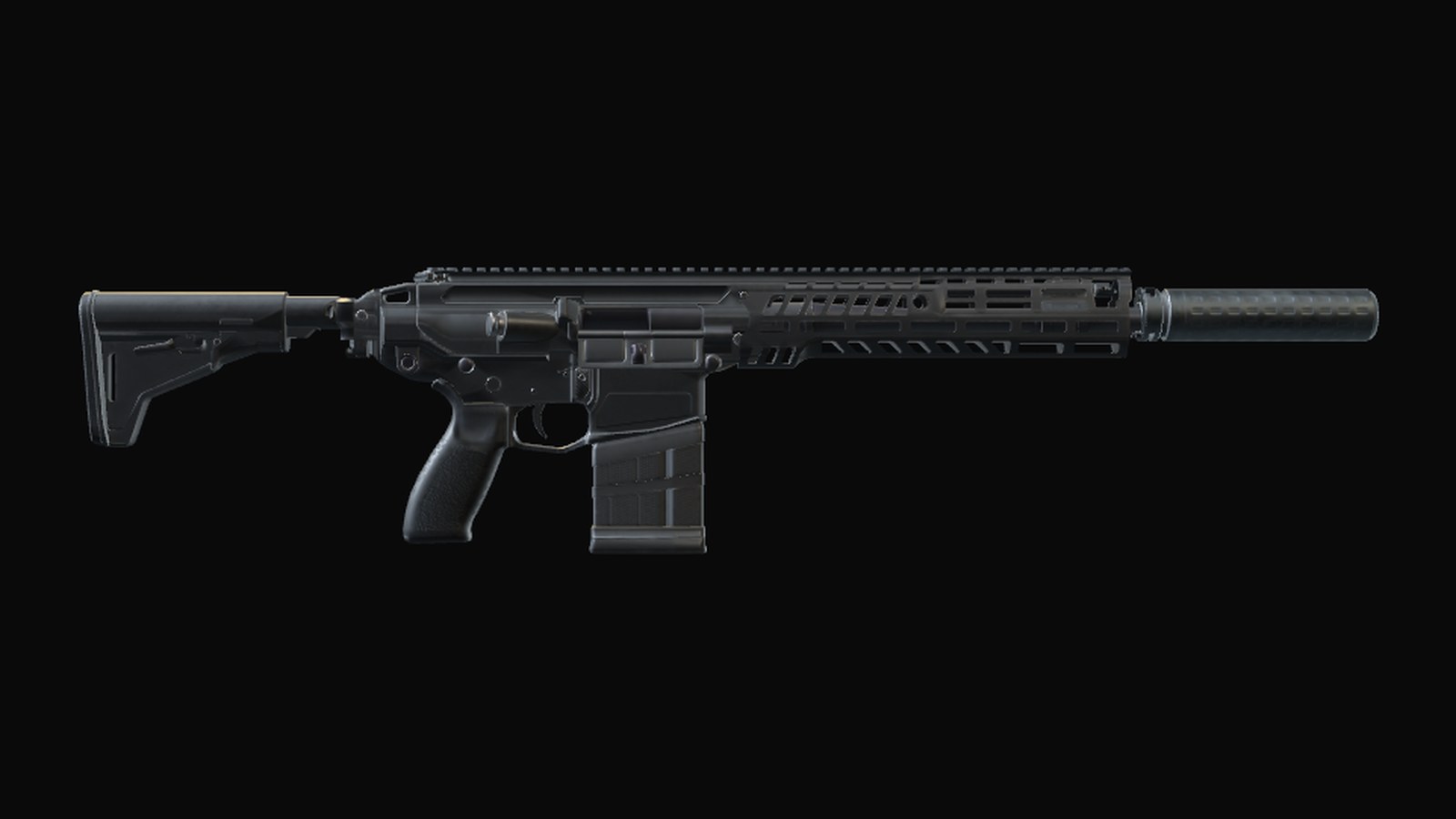
A suppressor does not mount to a rifle. It mounts to whatever is on the end of the barrel, and that is where most first-time buyers get caught. The can arrives, the muzzle device on the rifle is the wrong pattern, and the two parts sit in a drawer until the right device shows up. This article explains each mount system as a mechanical fact, names the muzzle device each one needs, and gives prices verified at the time of writing.
The logic below is the same logic Gear Guy's compatibility engine enforces when you configure a rifle in the app; the prose here is the long version of its warnings.
DIRECT THREAD
The simplest mount is no mount. A direct-thread suppressor has female threads at its rear and screws straight onto the barrel's male threads. Nothing sits between the can and the bore, which is why direct thread is the lightest, shortest, and most concentric way to hang a can.
Two things have to match. The first is thread pitch. The convention on AR-pattern rifles is 1/2x28 for 5.56 barrels and 5/8x24 for .30-caliber barrels, and the two are not interchangeable. Gear Guy's engine states the rule bluntly: "This muzzle device's thread pitch doesn't match the barrel — it won't thread on." Forcing a 5/8x24 device onto a 1/2x28 barrel strips the threads. The second is bore: a 5.56 can on a .30-caliber barrel is a baffle strike waiting to happen, and the engine's bore rule flags it as an error.
The weaknesses are practical. Removal takes a wrench or a careful hand and a cool can, an under-torqued can loosens under fire, and moving between hosts means unscrewing it every time. Direct thread suits a can that lives on one rifle. The CGS Hyperion and the SIG SURG556 in the Gear Guy catalog are both direct-thread cans by design.
HUB: THE UNIVERSAL REAR THREAD
Many modern suppressors have no fixed rear thread; a large 1.375x24 thread at the rear of the can takes a separate mount. That is the HUB standard, and one dealer's definition is exact: "HUB refers to 1.375x24 (also expressed as 1 3/8x24) TPI threads on the rear of the suppressor. The hybrid universal base, or HUB, has become the industry standard for suppressor mounting threads."
The point of HUB is that the can no longer decides the mount. A HUB can takes a direct-thread insert in whatever pitch you need, a KeyMo adapter, an ASR adapter, a pistol booster, or a fixed-barrel spacer, from any maker that machines to the thread. The Ridgeback Defense Rhodie 6K in the catalog ships HUB-compatible, and its maker sells it in direct-thread or Plan-B configurations off that one rear thread.
SIG TAPER-LOK
SIG's system is a tapered shoulder on the muzzle device that mates to a matching taper inside the suppressor. The taper does the alignment; the threads do the holding. SIG's stated benefit is alignment: on its own tapered-shoulder barrels, the taper is what keeps the can concentric, which SIG credits for accuracy and for reducing point-of-impact shift.
The consequence is that a SIG Taper-Lok can mounts only over a SIG Taper-Lok device. Gear Guy's MCX rule reads: "SIG suppressors require a SIG taper-lock compatible muzzle device," and its suggestion is to "Install the SIG Taper-Lok muzzle brake or flash hider before mounting." The same rule exists on the AR-15 side, phrased for the part picker: "SIG Taper-Lok suppressors mount onto a SIG Taper-Lok muzzle device — not directly. No Taper-Lok device is installed."
- SIG SRD556-QD Taper-Lok Muzzle Brake (1/2x28): The host device for the SRD556-QD, and SIG sells it on its own. Around $67 at a major dealer.
- SIG 3-Prong Flash Hider (Taper-Lok): The MCX factory flash hider on the same taper; the catalog carries it for the MCX Spear. Price not verified at the time of writing.
- SIG SRD556-QD: The 5.56 can this system was designed for, around $499 at a major dealer; the SRD762-QD (.30 caliber, ships with one 5/8x24 Taper-Lok brake) around $750.
SUREFIRE SOCOM FAST-ATTACH
SureFire's system locks the suppressor over the outside of a SureFire muzzle device with a locking collar. The muzzle device stays on the rifle and carries the alignment; the can slides on and locks in seconds, no tools. One dealer's description of the current cans: "Fast-Attach mounting locks over SureFire flash hiders, muzzle brakes, and WARCOMPs in seconds, no tools needed."
Every SOCOM-series can in the catalog uses it, and none of them is direct-thread. Gear Guy's rule is explicit about what counts as a host: "SOCOM Fast-Attach suppressors mount onto a SOCOM-pattern muzzle device — a WarComp or an SFMB brake — not directly. No SOCOM muzzle device is installed."
- SureFire WarComp 5.56 (1/2x28): A flash hider with compensator ports, and the most common SOCOM host on a carbine. $169 at SureFire.
- SureFire SFMB-556 Muzzle Brake (1/2x28): The brake version of the same interface, louder unsuppressed, better recoil control. $169 to $199 at SureFire depending on variant; the SFMB-762 (5/8x24) hosts the .30-caliber SOCOM cans.
- SureFire Warden: A blast diffuser that mounts to a SOCOM device the same way a can does, redirecting concussion forward when you shoot unsuppressed. It is not a host. The catalog tags it as a Fast-Attach device rather than a mountable one, so the engine will not accept it as satisfying the rule. $299 at SureFire for the Fast-Attach version.
DEAD AIR KEYMO
Dead Air's KeyMo is a taper mount with a mechanical detent. The KeyMo muzzle device carries the taper; the KeyMo adapter on the can seats onto it and the detent keeps it from backing off. Dead Air's own description: "The KeyMo system uses a taper design with a mechanical detent that resists loosening under heat and vibration."
The catalog splits Dead Air cans by how committed they are. The Sandman-S is KeyMo-only, so the engine requires a KeyMo device: "KeyMo-mount suppressors attach to a KeyMo muzzle device on the barrel, not directly. No KeyMo muzzle device is installed." The Nomad-30 ships with a 5/8x24 direct-thread mount and takes KeyMo as an option, so the rule deliberately does not fire on it.
- Dead Air KeyMo Muzzle Brake: Sold in 1/2x28, 5/8x24, 3/4x24, M18x1, and M18x1.5, all at $89 direct from Dead Air. The Sandman-S ships with a 5/8x24 KeyMo brake; a 5.56 host needs the 1/2x28.
- Dead Air Sandman-S: KeyMo-only, MSRP $999. Dead Air Nomad-30: direct thread standard, KeyMo and Xeno compatible, MSRP $949.
HUXWRX QD
HUXWRX cans mount over the company's own QD flash hider or brake using what it calls Torque Lock, a mechanical lockup between the can and a device that stays on the barrel. The practical fact is that the HX-QD and FLOW cans ship with a device in the box; the FLOW 762 Ti's $1,624 MSRP includes one 5/8x24 QD brake. It still has to go on the barrel, and a second host needs a second device.
Gear Guy's rule for the family: "HUXWRX HX-QD suppressors mount onto a HUXWRX QD flash hider or brake — not directly. No HUXWRX QD device is installed."
- HUXWRX Flash Hider-QD 556 (1/2x28): The 5.56 host device, 2.3 inches long and adding 1.7 inches to the barrel, compatible with the HX-QD and FLOW series. $159 at HUXWRX standalone.
- HUXWRX QD Muzzle Brake 762 (5/8x24): The .30-caliber host, bundled with the FLOW 762 Ti; standalone price not verified at the time of writing.
RUGGED DUAL TAPER
Rugged calls its interface the Dual Taper Locking System: the device and the can mate on tapered surfaces rather than on threads alone, so the lockup stays concentric and resists loosening under fire. Rugged's Razor 7.62 in the catalog is Dual Taper only, and the engine's rule reads: "Rugged Dual Taper Lock suppressors mount onto a Rugged Dual Taper muzzle device, not directly. No Rugged Dual Taper muzzle device is installed."
- Rugged M2 Brake (1/2x28 or 5/8x24): The Dual Taper host device, and the one that ships in the Razor 7.62's box. $102 direct from Rugged; the catalog lists it under its MB-series part family.
- Rugged Razor 7.62: Around $715 at a major dealer, with the M2 Brake included.
YHM PHANTOM QD
Yankee Hill's Phantom QD is a locking adapter on the can that seats over a Phantom-pattern muzzle device. The catalog's rule for it names the device by part number: "YHM Phantom QD suppressors mount onto a YHM Phantom QD muzzle device, not directly. No Phantom QD muzzle device is installed." One caution from YHM's own product line: the newer sRx-generation cans do not cross-mount with Phantom QD, so check the generation before assuming a Phantom device fits.
- YHM Phantom QD Muzzle Brake (YHM-4302, 1/2x28 or 5/8x24): 4140 steel, 2.4 inches long, shim kit included. $119.95 at YHM.
KAC M4QD AND QDC
Knight's Armament's system for the QDSS-NT4 is the M4QD flash suppressor: the can slides over the flash hider and a gate latch on the can locks it. The catalog's rule is specific to that pairing: "The KAC QDSS-NT4 mounts onto a KAC M4QD flash suppressor — not directly. No M4QD device is installed." KAC's later QDC interface, used on the SR-25 and M110 .30-caliber cans and on a 5.56 three-prong flash eliminator, is a different coupling and does not cross with M4QD.
- KAC 5.56mm M4QD Flash Hider Kit (1/2x28): $120.74 at Knight's Armament, shipped with a shim kit. The QDSS-NT4 itself is listed at $1,954.50 by KAC and was out of stock at the time of writing.
Q CHERRY BOMB AND PLAN-B
Q's system is not in the Gear Guy catalog, but it bridges direct thread and QD, so it comes up constantly. The Cherry Bomb is a small muzzle brake with a tapered shoulder and 360-degree ports, so it needs no timing or shims. The Plan-B is an adapter that threads into a HUB-pattern (1.375x24) or similar rear thread on a suppressor and mates to the Cherry Bomb's taper. The result is a taper-lock QD interface on a can sold as direct thread or HUB; the Rhodie 6K's maker offers it as a factory configuration.
OTHER INTERFACES IN THE CATALOG
Two more appear because the cans that use them are real and named. The Allen Engineering AEM5 is a reflex can that sits back over the barrel on an A-Mount muzzle device with an alignment collar; the mount is sold separately and the engine requires it. The ASE Utra SL5i-BL mounts on ASE's BoreLock flash hider or brake, a European system with no verified U.S. pricing. Both follow the shape of every rule above: the can names its interface, the device provides it, and the engine warns when the device is missing.
WHAT THE ENGINE ACTUALLY CHECKS
Four rules run every time a suppressor is on the bench, and reading them together is the whole mount question.
- Threaded barrel: "This suppressor requires a threaded barrel." No threads, no can, regardless of mount.
- Thread pitch: Muzzle device pitch must equal barrel pitch. A QD can carries no pitch of its own, so this rule looks at the device under it.
- Bore: The barrel's caliber must be in the can's rated set. "This suppressor is not rated for the barrel's caliber — firing risks a baffle strike."
- Mount interface: A QD can requires a device that provides its interface, with a suggestion that names the device by product.
A fifth, quieter check: a suppressor needs an exposed muzzle, so a handguard past the barrel blocks the can.
FINAL THOUGHTS
Pick the ecosystem before the can. If the suppressor will live on one rifle, direct thread or HUB is lighter and cheaper and removes the device question. If it will move between hosts, choose one QD family and buy that family's device for every barrel it will visit, at $67 to $199 each. Whatever you choose, match the thread pitch to the barrel, match the bore to the caliber, and let the app tell you what is missing before the parts are in the drawer.