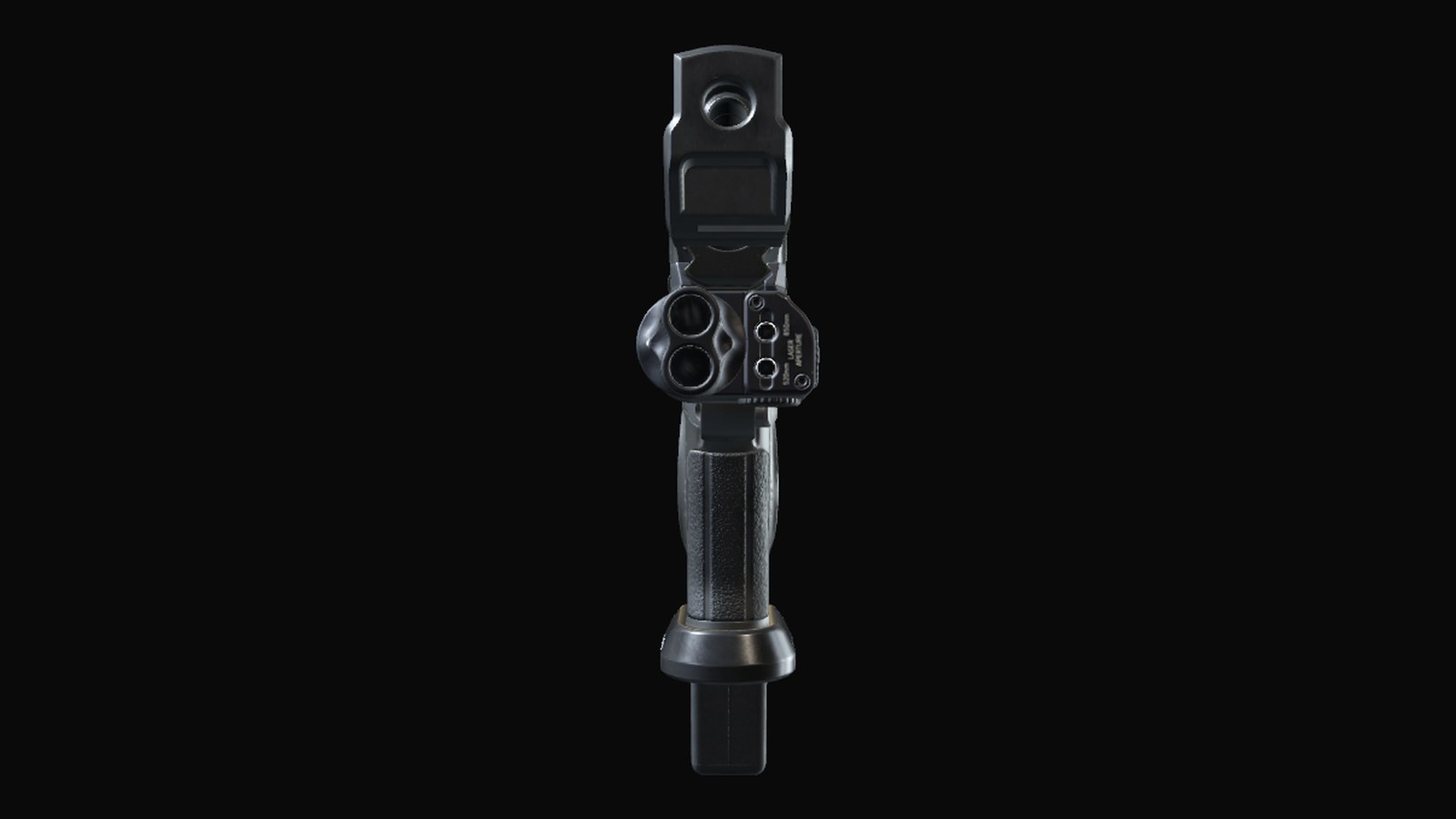
The M&P9 M2.0 is the pistol Smith & Wesson got right the second time. The internal chassis, the grip texture and the flat-face trigger fixed the original M&P's complaints, and the lineup has since spread into fourteen variants: full-size 4.25-inch and 5-inch guns, compacts at 4 and 3.6 inches, the Optics Ready and Metal frames, the Performance Center Pro, Threaded and Metal Carry Comp models, .40 S&W and .45 ACP versions, and the Shield Plus family. This guide is about the 9mm M2.0 full-size and compact; the Shield Plus is a different gun with its own parts.
Every product below is a real, named part, and every price was checked against the manufacturer or a major dealer at the time of writing. Where a price could not be verified it is left out, and the product is named without one.
WHERE TO SPEND FIRST
The M2.0's factory trigger is better than most striker guns, so a trigger is not the first purchase the way it is on some platforms. The optic is. After that, a light if the gun has a home-defense job, then the trigger, then the barrel-and-comp decision, then the small parts.
THE OPTIC AND THE PLATE SYSTEM
The M2.0 Optics Ready and C.O.R.E. slides do not have a footprint-specific cut. They have a multi-optic recess that takes adapter plates, and the plate is what decides which optic you can run. That is the single most important thing to understand before buying a dot for this gun: an RMR-footprint optic needs an RMR plate, an ACRO needs an ACRO plate, and a DeltaPoint Pro needs a DPP plate. The factory plate set covers the common footprints; the aftermarket plates are machined to tighter tolerances and are what most owners end up with.
- C&H Precision M2.0 C.O.R.E. to RMR plate: $51.99 from C&H. It mounts the Trijicon RMR, RMR HD and SRO, the Holosun 407C, 507C and 507Comp, and several others. C&H is explicit that it does not work with the Holosun 508T. C&H also makes M2.0 C.O.R.E. plates for the Aimpoint ACRO and the Leupold DeltaPoint Pro.
With the plate chosen, the optics that ship on this platform, in rough order of how often they end up on an M&P:
- Trijicon RMR Type 2 (3.25 MOA): The duty standard. Sport Optics lists it at $742 with a street price under $500. RMR footprint, 1.2 ounces, CR2032 battery with a four-year rating at setting four. It is an open emitter, which is the one argument against it on a carry gun.
- Holosun 507C X2: The value RMR-footprint optic, listed by Holosun at $364.69 and commonly around $300. A 0.91 x 0.63 inch window, 1.5 ounces, a CR1632 rated for 50,000 hours, Shake Awake and a solar panel.
- Leupold DeltaPoint Pro: Leupold lists the 2.5 MOA at $449.99. Its own footprint, a large window, and a top-loading battery, which means you can change it without pulling the optic off the plate.
- Aimpoint ACRO P-2: The enclosed-emitter choice at $617.00 from Aimpoint. 2.2 ounces, a 15 x 15 mm aperture, CR2032 rated for 50,000 hours, submersible to 35 meters. It needs the ACRO plate, and it is the pick if the gun rides in a duty holster in weather.
- Trijicon RMRcc (3.25 MOA): Sport Optics lists it at $699 with a street price under $500. It is the narrow-body RMR built for slim carry slides; on a full-size M&P it is a low-profile choice rather than a large-window one, and it mounts to the C.O.R.E. through its own plate.
- SIG ROMEO1PRO: A DeltaPoint Pro-footprint optic that shares the DPP plate. Named here because it ships in the catalog; the price was not verified at the time of writing.
The compatibility rule is simple and it applies to every one of these: match the plate to the footprint, then buy the optic.
THE LIGHT
The full-size M2.0 has a standard rail and the compact has a shorter one, so light length is the first filter. Flush-fit lights stop at the muzzle on the 4.25-inch gun; the larger duty lights extend past it.
- SureFire X300U-A: SureFire lists it at $379.00 to $399.00, 1,000 lumens, with the Rail-Lock mount. It is the duty standard and it does extend past the muzzle of the 4.25-inch gun.
- Modlite PL350: Modlite lists the complete package from $319.00 with a choice of PLHv3 or OKWv2 heads. The OKW head is the throw option; the PLH is the flood. It is the enthusiast alternative to the X300 and it uses a rechargeable cell.
- Streamlight TLR-7A: Streamlight's MSRP is $225.75 and street prices sit around $150 to $180. 500 lumens, a single CR123A, and it sits flush with the 4.25-inch muzzle, which is why it is the most common light on a carried M&P.
- SureFire XVL2: $1,799.00 from SureFire. 400 lumens of white light plus co-aligned green and infrared lasers in a 3.0-inch, 5.0-ounce body. It is a duty and night-vision tool; on an M&P it is a specific answer to a specific job, not a general upgrade.
Buy the holster for the light at the same time. A light-bearing holster is model-specific, and the M&P M2.0 with a TLR-7A or X300U-A is a common enough pairing that the major makers carry both.
THE TRIGGER
Apex Tactical built its reputation on the M&P, and its M2.0 kits are the reference aftermarket triggers for the platform.
- Apex Action Enhancement Trigger and Duty/Carry Kit: Apex lists the M2.0 kit at $119.95 with the polymer trigger and $154.95 with the aluminum trigger. It replaces the trigger, sear, sear spring, trigger return spring and striker block, and it is the kit for a carry or duty gun because it keeps the pull in a defensive range while cleaning up the take-up and reset.
- Apex Flat-Faced Forward Set Trigger Kit: Around $110 for the polymer version and about $180 for the aluminum version. The forward-set geometry shortens the pull and it is the competition kit; Apex sells frame-specific versions for the polymer and metal M2.0 frames.
The Performance Center models already ship with a flat-face trigger and a lighter pull, so check what your gun has before buying either kit. Trigger installation on a carry gun is a job for someone who knows the platform, and it is not covered here.
THREADED BARREL AND COMPENSATOR
Smith & Wesson sells the M2.0 with a factory 1/2x28 threaded barrel on the Performance Center Threaded model, and the Metal Carry Comp uses a ported barrel with its own slide. For everything else, a threaded barrel is an aftermarket purchase.
- Faxon Match Series Flame Fluted threaded barrel: Faxon lists the full-size version at $131.00 with a 4.71-inch length and 1/2-28 threads, and the M&P 2.0 Compact version at $128.00 and 4.59 inches. Faxon markets the full-size barrel as a drop-in for factory M&P full-size slides.
- Parker Mountain Machine M&P9 Compensator: $100.00 from PMM, 1/2x28, sold in two versions — one timed for the factory Smith & Wesson threaded barrel and one for aftermarket barrels. PMM lists it as fitting both the 1.0 and 2.0 slides and mounting with a shim kit, no set screws.
A compensator and a direct-thread suppressor occupy the same barrel threads, so a build carries one or the other. A suppressor is an NFA item and requires registration through a licensed dealer. As of January 1, 2026 the federal tax is $0, but registration is still required. Threaded barrels and compensators are regulated differently in some states; verify your state law first.
SIGHTS
If you run the gun without a dot, or you want irons that co-witness through one, two sight makers cover the M&P:
- Trijicon HD XR Night Sights: Trijicon's thin-front tritium set, made in a version for the M&P and M&P M2.0. Named here because it is the reference night sight; the price was not verified at the time of writing.
- Dawson Precision fixed Charger rear with fiber-optic front: Dawson's competition-style set for the M&P. Named without a price for the same reason.
MAGWELL, GRIP AND SMALL PARTS
- Tyrant CNC M&P 2.0 Full-Size Magwell: Around $69.99 at GunMag Warehouse. A flared aluminum magwell for the full-size frame; it does not fit the compact.
- Talon Grips for the M&P M2.0 Full Size: $24.99 from Talon in rubber or granulate textures. The M2.0's factory texture is aggressive already, so this is for owners who want the wrap for a specific reason, such as covering the palmswell seam.
- Palmswell inserts and backstraps: The M2.0 ships with four palmswell sizes. Try all four before buying anything else for the grip; the right insert fixes more than tape does.
Smith & Wesson's own 17-round steel magazine is the factory part for the full-size 9mm and the only magazine you need more of. Verify your state law on capacity before ordering.
THE METAL FRAME NOTE
The M2.0 Metal and Metal Carry Comp use a 7075-T6 aluminum frame with the same slide and barrel. They are heavier, they run the same optics and lights, and they do not always fit holsters molded for the polymer gun. Check the holster maker's fitment list for the Metal model specifically before assuming a polymer-frame holster carries over.
ON THE BENCH
Gear Guy lets you configure the M&P9 M2.0 in 3D from real named parts. Choose the plate, seat the RMRcc or the RMR on it, put a SureFire XVL2 on the rail, swap in the threaded barrel and add the comp, and see the build before anything is ordered. The compatibility engine reads the same catalog: it warns when an RMR, ACRO or DeltaPoint Pro is equipped without its plate, when a compensator is added to an unthreaded barrel, when a comp and a suppressor are asked to share one set of threads, and when a Shield Plus magazine is paired with a full-size frame — and it names the part that resolves each one.
Once the gun is real, the Armory keeps it in an AES-256-GCM encrypted vault on your device with no account and serials masked by default. The range log tracks round counts and deducts ammunition, the Capability sheet shows whether the build carries white light and whether it is suppressed, Identify can stand the gun up on the bench from a photo, and a build can be shared as a link at gearguyapp.com/b/.
FINAL THOUGHTS
Buy the plate and the optic together, add a TLR-7A if the gun has a defensive job, and put an Apex Duty/Carry kit in it once you have shot the factory trigger enough to know what you want changed. The threaded barrel and comp are a project for the range gun, and they come with a decision about suppressors. The M2.0 does not need much; the point of upgrading it is to add the things it was designed to accept.