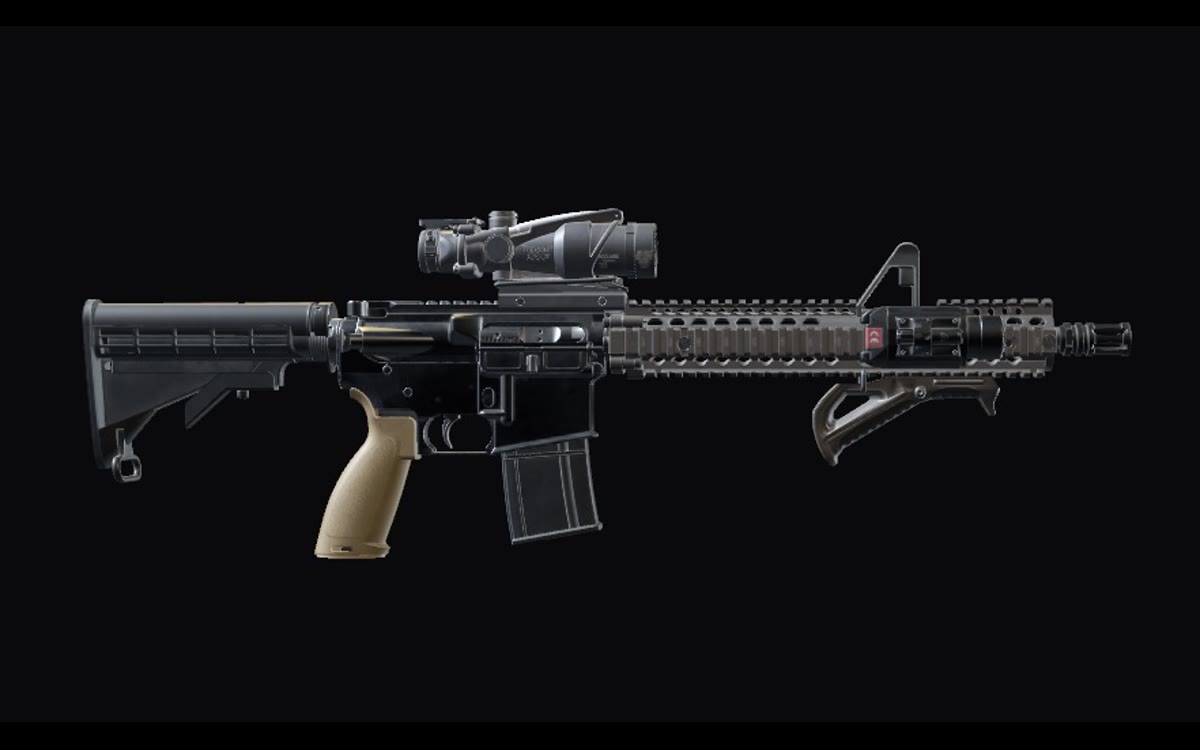
A foregrip is the cheapest change you can make to an AR-15 and one of the few that changes how you hold the rifle rather than how it looks. It is also the only accessory in this price range that can turn a legal firearm into an unregistered NFA item if you put the wrong kind on the wrong gun. This guide covers what each style does, the federal rule that separates a vertical grip from everything else, the mounting decisions, and then a ranking of the grips that ship in Gear Guy's catalog under their real names, with prices checked at the time of writing.
VERTICAL, ANGLED, OR HAND STOP
A vertical foregrip is a post at roughly 90 degrees to the bore. You wrap your hand around it. It gives the most leverage for driving the muzzle between targets and the most to hold when you are wearing gloves or the rail is hot, and a short one doubles as a barricade stop. It is also the style ATF treats as a defining feature, which matters below.
An angled foregrip rakes forward. Your palm rides the rail and the grip supports the heel of the hand, which is close to the thumb-forward hold most people already use on a long rail. It is a compromise: less leverage than a vertical, more surface than a hand stop.
A hand stop is a small block, usually under an ounce, that gives your support hand a fixed reference and something to pull against. It does not add a grip surface at all. It is the lightest option, the one that snags least, and the one that pairs best with the extended hold where the hand is out near the end of a 13″ or 15″ rail.
Which one is right depends on how you hold the rifle. If your support hand is wrapped around the rail out front, buy a hand stop or an angled grip. If your support hand is near the magazine well on a short rail, or you shoot in gloves, buy a short vertical. If you are configuring a pistol, read the next section before you buy anything.
THE FEDERAL RULE FOR PISTOLS
Adding a vertical foregrip to a pistol — including a braced pistol — makes it an “Any Other Weapon” (AOW) under ATF’s longstanding interpretation of the National Firearms Act. Making an AOW requires ATF Form 1 registration and approval BEFORE installing the grip. As of January 1, 2026 the federal tax is $0, but registration is still required — an unregistered AOW is a federal felony. Angled foregrips and hand stops are treated differently.
On the angled grips and hand stops: ATF has indicated in determination letters that angled foregrips and hand stops are not “vertical foregrips” and do not make a pistol an AOW. These letters are guidance, not law, and ATF defines “vertical” only as roughly 90° to the bore. Your state may regulate forward grips independently.
On a rifle — a firearm with a stock — none of this applies at the federal level, and a vertical grip on a registered short-barreled rifle raises no federal issue either. This article covers federal law only. Verify your state law before you configure a pistol with any forward grip.
M-LOK OR PICATINNY, AND HOW MUCH RAIL YOU HAVE
Grips come in two mounting families and they do not cross over. An M-LOK grip bolts into an M-LOK slot with T-nuts and sits flush against the rail — lighter, slimmer, and the right answer on any current M-LOK handguard. A Picatinny grip clamps a 1913 rail section; it is the only option on a quad rail like the Daniel Defense RIS II or a KAC RAS, and on an M-LOK rail it needs a short bolt-on Picatinny section first. Buy to match the rail.
Grips also take up rail. On a 7″ rail with a light mounted forward, a full-height vertical grip at the front leaves nothing for a pressure pad and can put your knuckles in the beam. On a 13″ or 15″ rail the problem inverts: a grip near the receiver leaves your hand well behind where the modern hold wants it. Place the grip where your hand already goes, then fit the light and switch around it.
THE RANKING
Only grips that ship in Gear Guy's catalog under a verified manufacturer and model name are ranked; prices were checked on September 1, 2026 at the manufacturer or a major dealer. Grouped by style, best first within each group.
HAND STOPS
- Arisaka Defense Hand Stop (M-LOK): $35 at arisakadefense.com. CNC-machined 6061 aluminum, Type III hard-anodized, 0.8 oz. Small enough to disappear, tall enough to pull against, and reversible as a barricade stop. The benchmark hand stop and the one to start with.
- Magpul M-LOK Hand Stop Kit: a polymer hand stop plus an index panel and a rail cover, with an adapter for polymer and wider aluminum handguards. Cheaper and bulkier than the Arisaka, and a good way to try the style. Magpul's own listing was unavailable at the time of writing, so no price is given.
VERTICAL GRIPS
- BCM Vertical Grip Short (Picatinny): MSRP $45, $35.95 at bravocompanyusa.com. The stubby vertical that made the style: low-profile, forward-angled polymer with a storage compartment. Black or flat dark earth.
- TangoDown Vertical Fore Grip Stubby (BGV-MK46K): $74.54 at tangodown.com. 3.43″ overall, 2.56 oz, Picatinny, storage compartment, made in the USA. The issue-pattern stubby and the most expensive of the polymer verticals; you are paying for the name on the clone.
- Daniel Defense Vertical Foregrip, M-LOK and Picatinny: $40 each at danieldefense.com. Soft-touch rubber overmold over polymer, in black, DD Tornado grey and Mil Spec+ brown. The M-LOK version is the shorter of the two; the Picatinny version stands about an inch taller.
- Magpul MVG M-LOK Vertical Grip: $22.95 at magpul.com, 1.4 oz with hardware. The budget vertical, and the lightest full-size one here.
- Knight's Armament Forward Pistol Grip (P/N 97098): $84.24 to $99.31 at knightarmco.com depending on color. The full-height GWOT-era vertical with a storage compartment, clamped by a captive thumbscrew to any 1913 rail. Buy it for a Block I clone; buy something shorter for anything else.
- Stark Equipment SE-5 Express Grip: a polymer Picatinny vertical with a storage compartment. Stark's own store did not display a price at the time of writing, so none is given.
ANGLED GRIPS
- Tyrant Designs MOD Foregrip: MSRP $74.95 for the M-LOK and KeyMod version. A machined-aluminum hybrid with polymer finger inserts, in black, nickel, grey, blue and red. The one angled grip in the catalog that is both in current production and shown on its own model; see the note below on the Magpul AFG-2 and BCM KAG.
GRIP-BIPODS
- UTG D-Grip with Quick Release Deployable Bipod: $109.97 at leapers.com. A vertical grip with a spring-deployed bipod inside it, 15.9 oz. Heavy, and Gear Guy will warn you if you also equip a separate bipod — but if you want one accessory to do both jobs, this is the one in the catalog.
NOT RANKED, AND WHY
Gear Guy carries a Magpul AFG-2 and a BCM KAG, but both render on a representative angled-grip model rather than their own, so neither is ranked despite being real, verified products — the AFG-2 lists at $34.95 at magpul.com. The Grip Pod Systems vertical grip/bipod is catalogued as a representative because the model does not resolve to a specific generation, and the True North Concepts GripStop K, a real $51.99 product, is shown on a borrowed model. The IMI Defense FSG2 is a real angled grip that IMI has discontinued. Every one of them is excluded for the same reason: this list only ranks what can be named and priced.
IN GEAR GUY
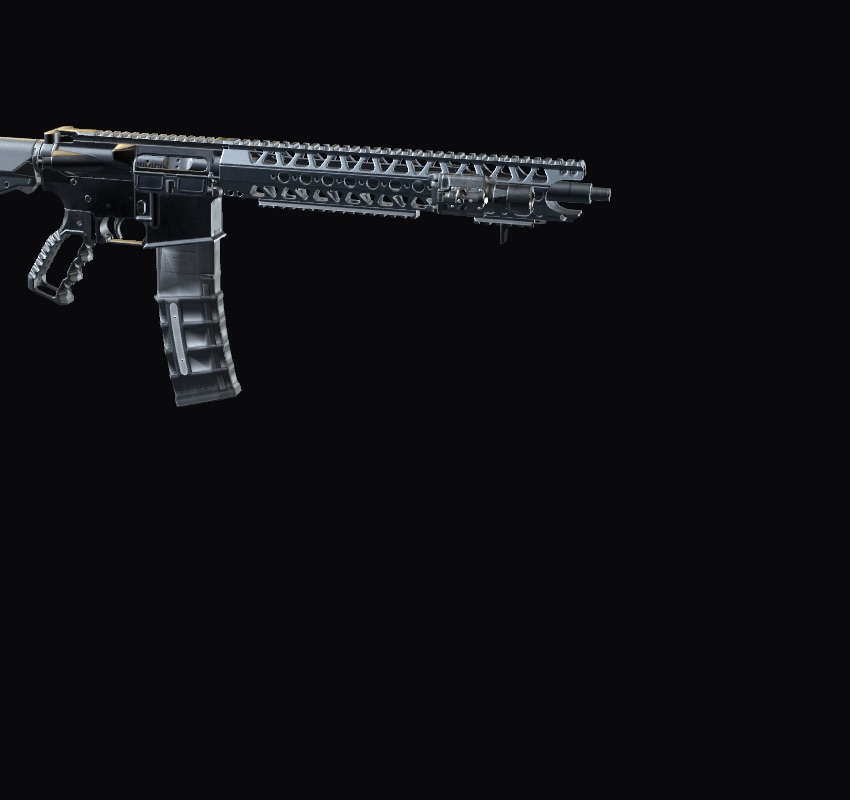
Every grip above mounts on the bench in 3D against the handguard you have equipped, so the rail-space question answers itself: put a short vertical at the front of a 7″ rail and then equip a light, and the compatibility engine warns that there is not enough rail space forward of the foregrip. Equip the D-Grip and a separate bipod and it warns that you have two. Grips are cheap enough that most people own several; the Armory keeps the ones you have in the encrypted vault, on-device, with no account, and a configuration you like shares as a link at gearguyapp.com/b/. If you photograph a rifle you are curious about, Identify stands the build up on the bench with any part it cannot name labelled "(representative)".
FINAL THOUGHTS
Buy the Arisaka hand stop first; it is $35, weighs almost nothing, and fits the way most people already hold a long rail. Buy a short vertical — the BCM or the TangoDown — if you run a short rail, wear gloves, or shoot from barricades. Buy the angled grip if you have tried both and want the middle. And if the firearm is a pistol, remember that the vertical grip is the one accessory here with a federal form attached to it, and that the form comes first.