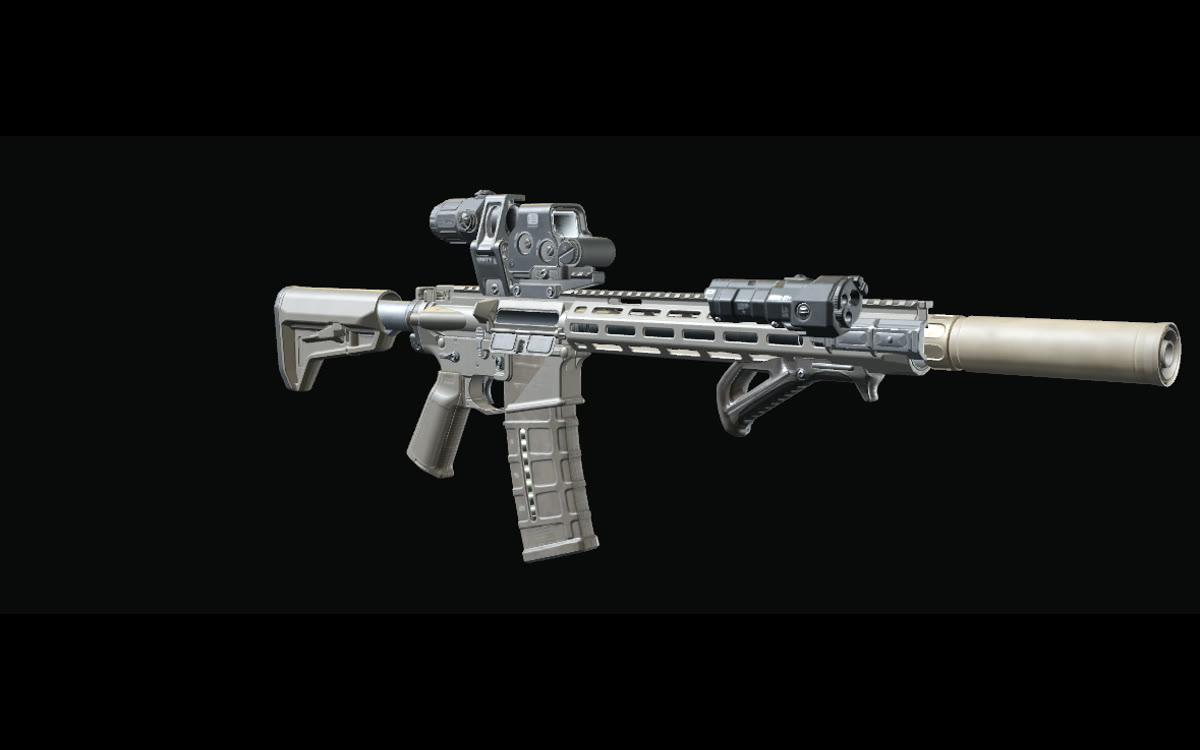
A 5.56 suppressor is the first can most rifle owners buy and the one that gets shot the most, which makes it the one where the trade-offs matter. Back pressure, weight forward of the muzzle, the mount system you commit to, and whether the can is rated for the rate of fire you actually run are all decisions you make once and live with for years.
This list covers ten suppressors, every one of them a real product from a real manufacturer that ships in the Gear Guy catalog under its own name. Prices were verified against the manufacturer or a major dealer at the time of writing and will drift; treat them as a ballpark, not a quote. Nothing here is a representative or stand-in model, and several catalog entries were left off the list because their names or ratings could not be verified. Those are noted at the end.
HOW THE LIST WAS RANKED
Five things, in roughly this order of weight.
- 5.56 rating: Either a dedicated 5.56 can, or a .30-caliber can whose manufacturer explicitly rates it for 5.56. A .30 can loses a little on 5.56 but gains a second caliber.
- Full-auto rating: A manufacturer statement that the can survives sustained fire. Rated does not mean unlimited; SureFire, for example, publishes a sustained-fire count before cooling.
- Flow-through vs baffle stack: Flow-through designs route gas forward to cut back pressure at the shooter's face. Conventional baffle stacks are simpler and often quieter at the muzzle but push more gas back through the action.
- Weight and length: The number that changes how the rifle handles every day.
- Mount system: Direct thread, HUB, or a proprietary quick-detach. A QD can commits you to that maker's muzzle devices on every host.
FLOW-THROUGH VS BAFFLE STACK
A conventional suppressor is a tube of baffles. Gas enters, expands into each chamber in turn, and exits slower and cooler. It is quiet and it is proven, and on a direct-impingement AR it also sends a noticeable amount of gas back down the gas tube and out of the receiver. That is the back pressure people complain about: faster bolt velocity, more fouling, more gas at the ear and eye.
A flow-through suppressor uses internal geometry that keeps gas moving forward instead of trapping it. The practical claims are lower back pressure and less gas to the face; the practical cost is that some are longer or louder at the muzzle than an equivalent baffle stack. HUXWRX based its line on this principle, and SureFire's newest SOCOM generation moved in the same direction, with the company claiming a 60 percent back-pressure reduction over its conventional cans.
Which is better depends on the host. A short-barreled AR with a suppressor is the case where flow-through earns its keep. A bolt gun does not care.
FULL-AUTO RATING: WHAT IT ACTUALLY MEANS
Nine of the ranked ten carry a manufacturer or dealer-listed full-auto or sustained-fire rating; SureFire's own RC4 page does not print one, though its RC2 and RC3 pages do. Read the fine print, because the statements are not equivalent. SureFire's SOCOM556-RC2 listing gives a sustained-fire limit of 90 rounds before cooling. Ridgeback rates the Rhodie 6K for "6 mags in 1 minute." Others say "full-auto rated" and stop there. A rating tells you the can was designed to survive heat, not that heat is free; every one of them will still shift point of impact and wear faster when run hot.
THE RANKED LIST
- SureFire SOCOM556-RC4: The current generation of the SOCOM line, all-Inconel, with SureFire's own claim of 60 percent less back pressure than its conventional cans. 17 oz, 6.3 inches long, 1.5-inch diameter, Fast-Attach QD over SureFire's WarComp and SFMB muzzle devices, optimized for 10.3-inch and longer barrels. MSRP $1,549. The most expensive way to get a duty-grade 5.56 can that no longer gasses you.
- SureFire SOCOM556-RC3: The previous flagship, still in production and still the benchmark many buyers compare against. 17 oz, 6.4 inches, 1.5-inch diameter, high-temperature alloys and stainless, Fast-Attach QD, made to "withstand full-auto fire." Around $1,709 at a major dealer, which puts it above the RC4 at the time of writing; buy it for the track record, not the price.
- HUXWRX FLOW 762 Ti: A titanium multi-caliber flow-through can rated for 5.56, 6.5, and 7.62, full-auto rated, 11.8 oz and 6.7 inches long with a 1.8-inch diameter. It mounts over HUXWRX QD devices with the company's Torque Lock interface, and the MSRP of $1,624 includes a 5/8x24 QD brake. If you want one can for a 5.56 carbine and a .308 rifle with minimal back pressure, this is the one on this list.
- Dead Air Sandman-S: The hard-use .30 can, rated to .300 RUM and full-auto rated, on Dead Air's KeyMo quick-detach. 17.7 oz, 6.8 inches, 1.5-inch diameter, Cobalt 6 baffles in a welded stainless core. MSRP $999. It is a baffle stack, so expect more gas than the flow-through cans above it, and it is KeyMo-only, so budget for a KeyMo device per host.
- Dead Air Nomad-30: The lighter, more flexible Dead Air. 14.5 oz, 6.5 inches, 1.735-inch diameter, rated to .300 Norma Magnum by Dead Air with 5.56 explicitly acceptable, and full-auto rated per its dealer listing. It ships with a 5/8x24 direct-thread mount and accepts KeyMo and Xeno mounts, so you are not locked into a QD ecosystem on day one. MSRP $949; seen at $799 from a major dealer.
- CGS Hyperion: A 3D-printed Grade 5 titanium .30 can that CGS rates full-auto from 5.56 through .300 RUM. It is long at 9.5 inches and 17.3 oz on a 5/8x24 direct thread, and that length is the point: it is bought for maximum sound reduction on a dedicated host, not for a short carbine. Around $1,379.
- Rugged Razor 7.62: The compact Rugged, 6.4 inches and 15.3 oz with a 1.5-inch diameter, rated to .300 RUM and "full-auto and belt-fed rated," with interchangeable end caps for 5.56 and .30 bores. It ships with Rugged's M2 Brake on the Dual Taper QD interface. Around $715 at a major dealer, the best price-to-rating ratio on this list.
- Ridgeback Defense Rhodie 6K: The compact 5.56 can, 4.5 inches and 12.5 oz in Inconel, HUB 1-3/8x24 mount, rated for 10.3-inch and longer barrels and "full auto rated for 6 mags in 1 minute." Ridgeback publishes a five-shot average of 138.1 dB on a SOLGW MK1 test host; treat that as the manufacturer's own measurement on its own setup. $795 direct.
- SIG Sauer SRD556-QD: An Inconel 718 dedicated 5.56 can on SIG's Taper-Lok fast-attach system, 14 oz, 6.5 inches, 1.625-inch diameter, full-auto rated. Around $499 at a major dealer, which makes it the least expensive QD can here. The catch is the ecosystem: it mounts only over SIG Taper-Lok devices, so factor a brake or flash hider per host.
- SIG Sauer SURG556: The Inconel high-flow can from the USSOCOM Suppressed Upper Receiver Group program, sold standalone, direct thread, with a detachable titanium heat shield. 7.31 inches, 20.48 oz without the shield and 22.88 oz with it, full-auto rated for sustained fire. Around $1,899 at a major dealer. It is heavy and expensive because it was designed for a job most owners do not have; it is here because it is the only production 5.56 can on this list rated for that job.
ALSO IN THE CATALOG
Four more named cans ship in Gear Guy and are worth knowing, but sit outside the ranked ten.
- CGS Helios QD Ti: Titanium, 9.6 oz, 7.2 inches, rated to .300 Norma Magnum with a 10-inch minimum barrel on 5.56 and interchangeable 1/2x28 and 5/8x24 rear caps. Around $1,650. It would rank on weight alone; it is off the list because its dealer listing does not state a full-auto rating.
- Allen Engineering AEM5: The Mk12 SPR suppressor, a reflex design that sits back over the barrel on an A-mount collar: 8.8 inches overall, 21 oz, 5.56 only, not full-auto rated per its dealer listing. Dealer pricing runs about $675 to $800. Buy it for a Mk12 clone, not a carbine.
- SureFire SOCOM556-MINI2 and SOCOM556-RC2: The earlier SOCOM generation, still sold. The MINI2 is 5 inches and 15 oz; the RC2 is 6.4 inches and 17 oz with the 90-round sustained-fire guidance. Both run around $1,196 and both are outclassed by the RC4 at a similar price.
- HUXWRX HX-QD 556 Ti and HX-QD 762 Ti: Both are marked discontinued with limited availability on HUXWRX's own pages (MSRP $1,407 and $1,522). They remain in the catalog because owners have them; if you are buying new, the FLOW line replaced them.
THE MOUNT DECISION
Half of this list is quick-detach, and every QD system is proprietary: SureFire Fast-Attach, Dead Air KeyMo, HUXWRX QD, Rugged Dual Taper, SIG Taper-Lok. Each one needs its own muzzle device on every rifle the can will visit. The HUB-pattern Rhodie 6K and the direct-thread Hyperion and SURG556 avoid the commitment, and the Nomad-30 splits the difference by shipping direct-thread with QD as an option. Choosing the can is choosing the ecosystem, and the mounts article on this site goes through each one.
HOST BARREL LENGTH
Manufacturers publish minimum barrel lengths for a reason. The RC4 is optimized for 10.3 inches and up, the Rhodie 6K lists 10.3 inches as its floor, and the Helios QD Ti lists 10 inches on 5.56. Below those lengths a 5.56 carbine is loud and gassy even suppressed, and the pressure at the can's blast baffle climbs. If your host is a short SBR, the flow-through cans and the Inconel cans are the ones designed for it, and a 5.56 can on a 7.5-inch barrel is a compromise no matter whose name is on it.
WHERE THIS LIVES IN GEAR GUY
Every can above is a named part in the app's suppressor slot. When you visualize a rifle in 3D and add one, the compatibility engine checks the pairing: a threaded barrel is required, the can's rated bore has to include the barrel's caliber, and a QD can with no matching muzzle device on the barrel raises a warning that names the device it needs. The Capability sheet for the build shows a suppressed row, so a configured rifle reads as suppressed or not at a glance.
Once the can is yours, its serial number, approval date, and host assignment live in the Armory, an AES-256-GCM encrypted vault on your device with no account and serials masked by default. The NFA education sheet reminds you that the can is a registered item and that, as of January 1, 2026 the federal tax is $0, but registration is still required.
FINAL THOUGHTS
If you want the least gas in your face on a short AR, the SOCOM556-RC4 and the FLOW 762 Ti are the two to compare, and the FLOW covers a second caliber. If you want the best rating for the money, the Razor 7.62 and the SRD556-QD are hard to argue with, provided you accept their mount ecosystems. If the can lives on one rifle and never comes off, the Hyperion or the Rhodie 6K on a direct-thread or HUB mount removes the ecosystem question entirely. Pick the mount before you pick the can, verify the price the day you buy, and put the paperwork somewhere encrypted the day it arrives.